

Vietnam has entered a phase of tremendous expansion, particularly in the logistics sector, which necessitates significant modifications so that other businesses may grow alongside. As we all know, Vietnam is considered to be a country with incredible potential in marine transport due to its 3,260 kilometers of coastline and extensive river system.
By 2030, the government plans to transform Vietnam into a powerful marine nation with a 10% GDP share for the maritime industry. In addition, the government aims to increase the 28 coastal provinces’ share of the national economy from the current 60% to 65%-70% over the next few years.
Statistics show that there were 29,694 businesses that provide logistics services in 2018. Even while this seems like a lot, up to 97% of these businesses are micro, small, and medium-sized ones. Due to a lack of resources, the company’s organizational structure is just so basic, not very specialized, and unable to set up any representative offices abroad, which leaves the information source still somewhat constrained. Therefore, the work must be done through agents of multinational corporations in other nations. In addition, despite their abundance, Vietnamese logistics firms only cater to a small number of service sectors along the service value chain, meeting only around 25% of the local demand.
In terms of the scope of activities, for instance, APL Logistics and Maersk Logistics operate in approximately 100 and 60 countries respectively. Vietnamese businesses presently only operate on the domestic market or in a small number of countries in the region. This is one of the restrictions on offering package services to clients of Vietnamese businesses. Due to this limitation, Vietnamese businesses find it challenging to compete with foreign ones in the current globalization trend where shippers seek to outsource from numerous nations and regions.
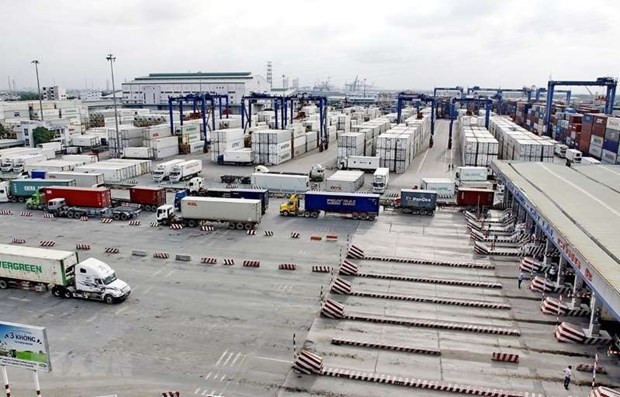
The seaport, which serves as a hub for transportation by linking the landmass to the water, is also outfitted with the infrastructure and tools required for carrying out a variety of operations, including loading and unloading cargo. However, the majority of Vietnamese seaports are not set up for the launching and discharging of specialized ships. Vietnam and European seaports are connected by ports without direct maritime services. Moreover, domestic airports also lack warehousing facilities and equipment for loading and unloading cargo, which makes it difficult to get the work done quickly. Other infrastructure constraints include shortages of telecommunications and energy.
In comparison to nations like the US or China, Vietnam’s logistics expenditures represent around 20.9% of the country’s GDP, according to research firm Armstrong & Associates. High logistics costs make it more challenging to attract foreign investment and less effective to introduce workers to the labor market or to promote exports.
Therefore, it is essential that both businesses and policymakers develop adequate, timely, and appropriate long-term solutions based on the significant influence that the logistics service industry has on production, business activities and the national economy.